
From Technical Expert to Trusted Leader: A Two-Year Coaching Journey
 Ian Baker·24 August 2026
Leadership Coaching, Emotional Intelligence, Executive Development
How executive coaching helped one technical professional build confidence, influence others and become recognised as a trusted leader.
When people think about executive coaching, they often imagine it is for CEOs or senior executives who need help solving strategic problems. In reality, some of the most significant leadership transitions happen much earlier.
This is the story of one technical professional who joined a new team and, over the course of two years, developed the confidence, judgement and leadership presence to become recognised not just for technical expertise, but for the way they influenced people and delivered results.
(Some details have been changed to protect confidentiality.
The Challenge
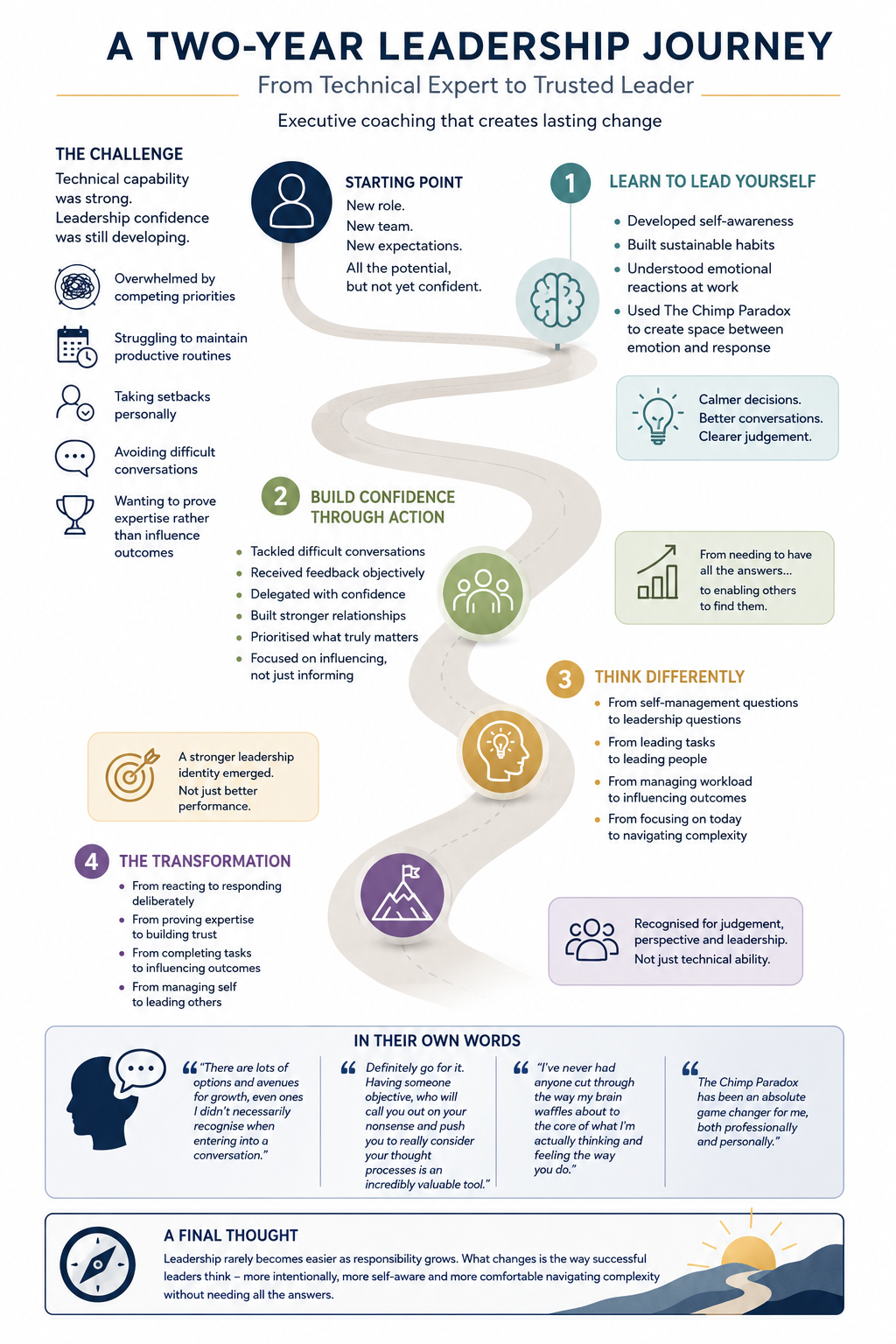
When we first met, my client had only been in their new role for a few months. Like many experienced professionals joining a new organisation, they had the technical capability to succeed. What they were still developing was confidence within a new environment, new relationships and new expectations.
Initially, the challenges sounded familiar: feeling overwhelmed by competing priorities, maintaining productive routines, taking setbacks personally, avoiding difficult conversations and wanting to prove expertise rather than influence outcomes.
None of these were capability issues. They were leadership issues.
The First Step: Learning to Lead Yourself
Our early coaching sessions focused on self-awareness, sustainable habits and understanding emotional reactions at work. One of the most influential frameworks we explored was The Chimp Paradox by Professor Steve Peters. It gave the client a practical language for recognising emotional reactions before they dictated behaviour. That simple shift created space between emotion and response, leading to calmer decisions, better conversations and clearer judgement.
Confidence Doesn't Arrive Overnight
As confidence grew, our conversations evolved from productivity towards leadership. We explored difficult conversations, feedback, delegation, stakeholder relationships, prioritisation and influence. The real shift came when the client moved from believing they had to provide all the answers to becoming someone who enabled others to succeed.
Thinking Differently
The coaching questions changed over time. Early sessions centred on self-management. Later conversations focused on leading people, influencing outcomes and navigating complexity. That progression reflected a growing leadership identity rather than simply improved performance.
What Changed?
By the end of the engagement, the transformation was evident in behaviour rather than job title. The client had moved from reacting to responding deliberately, from proving expertise to building trust, from completing tasks to influencing outcomes and from managing themselves to leading others.
In the Client's Own Words
“There are lots of options and avenues for growth, even ones that I didn't necessarily recognise when entering into a conversation.”
“Definitely go for it. Having someone objective, who will call you out on your nonsense and push you to really consider your thought processes is an incredibly valuable tool.”
“I've never had anyone cut through the way my brain waffles about to the core of what I'm actually thinking and feeling the way you do.”
“The Chimp Paradox has been an absolute game changer for me, both professionally and personally.”
My Reflection
People rarely seek coaching because they lack technical ability. More often, they reach a point where what made them successful in the past is no longer enough for the next stage of their career. The transition from expert to leader is about thinking differently, understanding yourself before influencing others and creating confidence and trust in the people around you.
A Final Thought
Leadership rarely becomes easier as responsibility grows. What changes is the way successful leaders think. They become more intentional, more self-aware and more comfortable navigating complexity without feeling the need to have every answer.
If this article prompted you to reflect on your own leadership journey, then it has achieved exactly what it was intended to do. Sometimes a single conversation is enough to uncover a completely different perspective and that can change far more than the next meeting or the next promotion.
Where are you leading from?
Find out in six minutes.
Take the Sovereignty Matrix self-assessment, or book a Decision Session and leave with three decisions you can make immediately.